











Rigid PCBs – Technical specification
| Feature | Technical specification |
|---|---|
| Number of layers | 1-40 layer |
| Solder Mask Color | Green, White, Blue, Black, Red, Yellow |
| Board Thickness | 0.1mm – 0.8mm |
| Materials | Polyimide, Polyester |
| Copper weights (finished) | 0.5oz – 2.0oz |
| Minimum track and gap | 0.075mm / 0.075mm |
| PCB thickness | 0.40mm – 3.20mm |
| Maximum dimensions | 610mm x 450mm; dependent upon laser drilling machine |
| Surface finishes available | HASL – Hot air solder leveling Lead – free HASL – RoHS ENIG – RoHS Immersion Tin – RoHS OSP – RoHS |
| Min Tracing/Spacing | 3mil/3mil |
| Board Size | Min 6*6mm, Max 406*610mm |
| Max. Array Size | 1-40 layer |
| Solder Mask Color | Green, White, Blue, Black, Red, Yellow |
| Max. Array Size | 500*600mm / 250*1500mm(Special) |
| Min.board Size | 1 *1mm |
| Max.Board thickness | 0.23mm / 0.4mm(Special) |
| Min,Board thickness | 0.075mm / 0.065 mm(Special) |
| Board thickness | Tolerance ±0.03 mm |
Rigid PCB:
Rigid PCB: Often used as a motherboard, it cannot be bent.
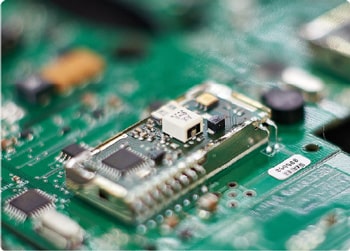
Most of the PCBs we usually see are rigid PCBs, such as computer motherboards, graphics cards, memory and so on.
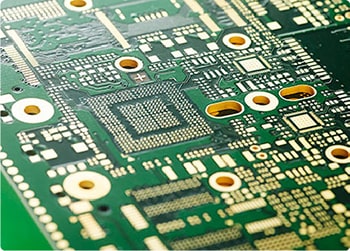
Rigid PCB is a type of printed circuit board and is the most manufactured PCB. Rigid PCB is a circuit board built on a rigid base layer that cannot be bent. Made of solid substrate material, it can effectively prevent the deformation of the circuit board. The most common rigid PCB is the computer motherboard. A motherboard is a multilayer PCB designed to distribute power from a power supply while allowing communication between all the components of the computer, such as the CPU, GPU, and RAM.
Rigid PCBs can be used anywhere the PCB itself needs to set shape and hold for the remainder of the life of the device. A rigid PCB can be anything from a simple single-layer PCB to an eight- or ten-layer multilayer PCB.