
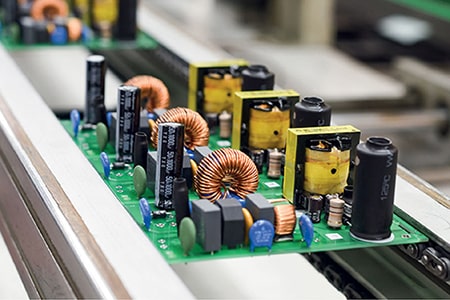









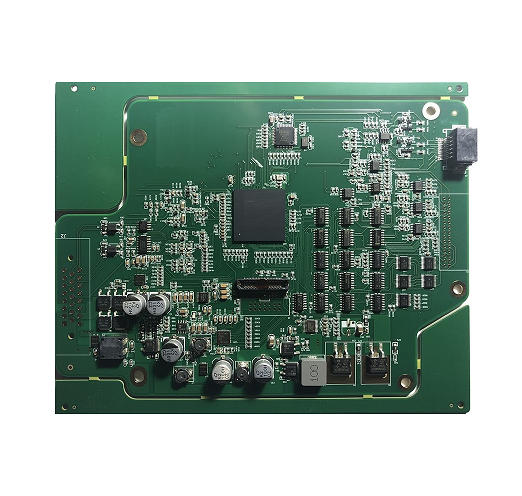
PCBA de la unidad de control electrónico (ECU) para automoción
Modern automobiles rely heavily on automotive control electronics to deliver safe, efficient, and intelligent driving performance. Unlike traditional mechanical vehicles, today’s cars integrate sophisticated electronic systems to monitor and regulate all core driving behaviors. Automotive control electronics serve as the core backbone of modern vehicle operation. They replace outdated pure mechanical control modes and enable precise, real-time control of every vehicle function.
A complete automotive electronic control system consists of three core collaborative components: sensors, automotive ECU (Electronic Control Unit), and actuators. These three parts work together continuously to collect data, analyze signals, and execute commands. They form a closed-loop control system that ensures stable and accurate vehicle operation in all driving scenarios.
Vehicle sensors are the perceptual front end of automotive control electronics. They capture real-time physical data during vehicle operation, including engine speed, traveling speed, brake pressure, steering angle, and ambient temperature. Sensors convert collected physical parameters into standard electrical signals. These readable electrical signals are then transmitted to the automotive ECU for real-time analysis and judgment.
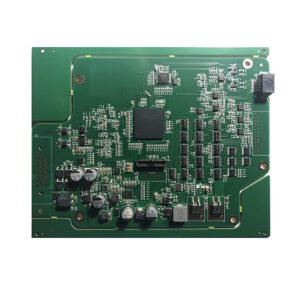
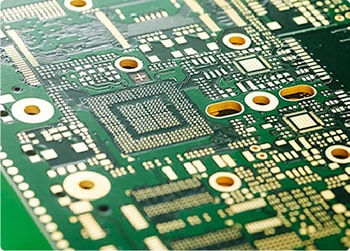
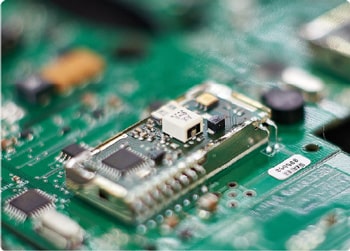
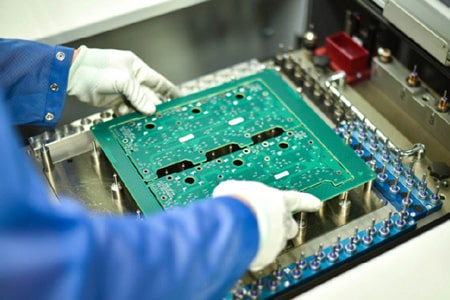
The automotive ECU is the central control core of all vehicle electronic systems. Most modern passenger and commercial vehicles are equipped with multiple independent ECUs to manage different functional modules. The reliability and stability of each ECU largely depend on professional automotive-grade PCBA processing technology. As the core carrier of ECU chips, resistors, capacitors, and signal circuits, ECU PCBA requires ultra-precision manufacturing to adapt to harsh vehicle working conditions. Qualified manufacturers adopt standard automotive SMT mounting, high-precision reflow soldering, and X-Ray full inspection for miniature components such as BGA and QFN. This strict processing procedure effectively prevents virtual soldering, cold soldering, and circuit failure caused by long-term vibration and temperature changes. Every automotive PCBA is labeled with a unique traceability code. It records complete production information, including raw material batches, processing parameters, and quality inspection records, to meet strict vehicle reliability standards. During normal operation, the ECU receives real-time signal data from sensors. It compares collected data with built-in control logic and threshold parameters. Finally, it outputs accurate control commands to guide corresponding actuators.
Actuators are the execution terminals of control commands. They convert electronic instructions from ECUs into mechanical actions. Typical actuators include fuel injectors, brake valves, steering motors and cooling system regulators. They directly adjust the running state of vehicle mechanical structures to complete active control.
Automotive control electronics cover three key vehicle application fields. The first is powertrain control. It mainly manages engine fuel injection, ignition timing and transmission shifting. This control optimizes power output and reduces fuel consumption and exhaust emissions effectively.
The second field is chassis safety control. Classic systems include anti-lock braking systems and electronic stability control. The system monitors vehicle posture and wheel slip status in real time. It adjusts brake force and power output instantly when the vehicle skids or loses balance. This greatly improves driving safety on complex road conditions.
The third field is body and intelligent control. It covers adaptive headlights, automatic air conditioning, active air intake grilles and head-up display adjustment. These electronic controls improve driving comfort and vehicle intelligence. With the development of drive-by-wire technology, mechanical connecting parts are gradually replaced by electronic signal transmission. Steering, braking and throttle control all achieve electronic wired operation.
Automotive control electronics and ECU PCBA products must comply with strict vehicle-level reliability specifications. Vehicle working environments are extremely complex, with drastic temperature differences, long-term mechanical vibration, and unstable voltage interference. All electronic modules and PCBA boards need to resist fatigue failure and signal distortion in extreme conditions. Standard automotive-grade processing and testing ensure long-term stable operation, real-time fault self-diagnosis, and overvoltage protection for vehicle electronic systems.
With the rapid development of new energy vehicles and intelligent driving technology, automotive control electronics and high-precision ECU PCBA processing have become more critical. New energy vehicles rely on dedicated ECUs to manage battery charge and discharge, motor operation, and energy distribution. Advanced driver-assistance systems (ADAS) also require high-performance ECU hardware and reliable PCBA manufacturing to support multi-sensor fusion and high-speed data calculation, realizing safe automatic and auxiliary driving.
To sum up, automotive control electronics connect vehicle mechanical structures and intelligent software systems. High-quality ECU PCBA processing is the fundamental guarantee for the stability, safety, and durability of all automotive electronic control functions. Together, they support efficient, comfortable, and reliable vehicle operation, and drive the continuous upgrading of modern intelligent and new energy automobiles.