

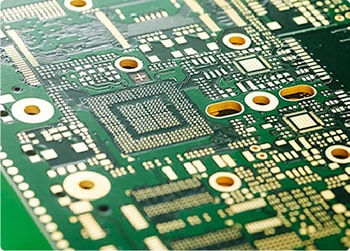

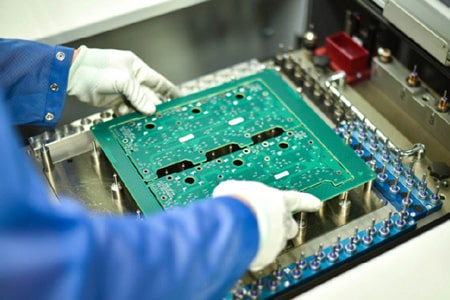
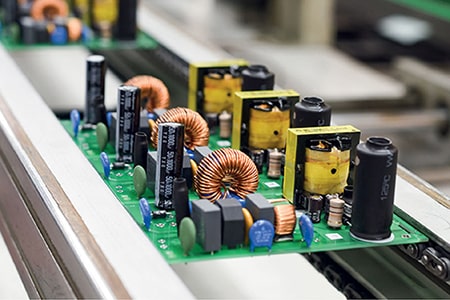










Aluminum Nitride (AlN) ceramic is a high-performance wide-bandgap ceramic compound widely used in semiconductor packaging and high-power thermal management systems. Unlike conventional alumina ceramic and aluminum core substrates, Aluminum Nitride ceramic material integrates ultra-high thermal conductivity, silicon-matched thermal expansion and superior electrical insulation. Its stable, repeatable material parameters are the core reason why designers prioritize high temperature resistant Aluminum Nitride ceramic for high-reliability power electronics and precision optoelectronic devices.
To clarify standardized industrial specifications, the table below summarizes verified core parameters of mainstream commercial-grade AlN substrates. All values adopt room-temperature industrial testing standards, covering thermal, electrical, mechanical and physical properties that directly guide Aluminum Nitride PCB substrate material selection and structural design.
|
Parameter Category
|
Technical Item
|
Typical Industrial Value
|
Test Condition
|
Unit
|
|---|---|---|---|---|
|
Thermal Properties
|
Thermal Conductivity
|
170–200
|
25℃ Room Temperature
|
W/m·K
|
|
Coefficient of Thermal Expansion (CTE)
|
4.5–5.5
|
RT~400℃
|
ppm/℃
|
|
|
Specific Heat Capacity
|
740
|
25℃
|
J/kg·K
|
|
|
Electrical Properties
|
Dielectric Constant (Dk)
|
8.5–8.8
|
1MHz–2GHz
|
–
|
|
Dielectric Loss Tangent
|
0.0001–0.001
|
1MHz
|
–
|
|
|
Volume Resistivity
|
≥10¹⁴
|
25℃
|
Ω·cm
|
|
|
Mechanical Properties
|
Flexural Strength
|
350–450
|
3-point bending test
|
MPa
|
|
Young’s Modulus
|
320
|
Standard industrial test
|
GPa
|
|
|
Vickers Hardness
|
≥10
|
4.9N load
|
GPa
|
|
|
Physical Property
|
Density
|
≥3.2
|
Room temperature
|
g/cm³
|
Parameter matching directly determines field application performance. The intuitive comparison below shows core performance gaps between high thermal conductivity Aluminum Nitride and mainstream competing ceramic substrates, explaining why AlN dominates high-power precision packaging scenarios.
|
Material Type
|
Thermal Conductivity (W/m·K)
|
CTE (ppm/℃)
|
Comprehensive Application Advantage
|
|---|---|---|---|
|
Aluminum Nitride (AlN)
|
170–200
|
4.5–5.5
|
Best thermal & CTE balance, ideal for high-power semiconductor packaging
|
|
Alumina Ceramic
|
25–35
|
6.5–7.5
|
Low cost, poor heat dissipation, only suitable for low-power circuits
|
|
Silicon Carbide
|
300–350
|
2.5–3.5
|
Ultra-high thermal conductivity, poor insulation, high manufacturing cost
|
Thermal performance is AlN’s most competitive technical indicator. Its 170–200 W/m·K thermal conductivity is nearly six times higher than ordinary alumina ceramic. This gap becomes decisive in high-load continuous operating scenarios. In actual engineering cases, a new energy vehicle IGBT power module project previously adopted alumina substrates. Under long-term 80% rated load operation, sustained heat accumulation caused junction temperature overshoot and frequent power derating. After switching to Aluminum Nitride substrate, the module’s overall heat dissipation efficiency improved by more than 40%, and long-term operating temperature stabilized within a safe range, completely solving overheating-induced performance attenuation.
Low thermal expansion coefficient is another key advantage for high-precision packaging reliability. AlN’s CTE value of 4.5–5.5 ppm/℃ closely matches silicon chip materials. Traditional ceramic substrates with larger CTE differences generate obvious thermal stress during temperature cycling, easily causing solder joint cracking and layer delamination. A practical 5G RF communication chip packaging case verified this advantage. The project adopted ultra-fine pitch flip-chip packaging, requiring strict thermal stability after repeated cold and hot impact tests. AlN substrates maintained zero solder joint failure after 1000-cycle temperature impact tests, while alumina substrate samples showed 8% micro-crack failure rate, fully proving AlN’s superior structural matching performance.
Stable electrical parameters support high-frequency and high-voltage working reliability of power electronic equipment. High-purity AlN ceramic maintains ultra-high volume resistivity and low dielectric loss across wide frequency and temperature ranges. It will not produce leakage current or signal distortion under long-term high-voltage operation. In industrial high-frequency inverter module applications, many manufacturers choose AlN substrates to replace traditional insulating materials. Its stable dielectric constant effectively suppresses high-frequency signal interference and ensures precise and consistent signal transmission of high-power control circuits.
Reliable mechanical and environmental parameters adapt AlN substrates to harsh industrial working conditions. With flexural strength up to 450 MPa and excellent hardness, it retains complete structural stability after thinning and miniaturization processing. It features near-zero water absorption and strong chemical corrosion resistance, operating stably between -50℃ and 250℃. In aerospace precision power supply equipment projects,high temperature resistant Aluminum Nitride ceramic serves as the core heat dissipation and insulating substrate. It stably withstands extreme temperature changes and complex atmospheric environments, meeting the long-life and high-reliability design standards of aerospace equipment.
In summary, Aluminum Nitride’s comprehensive parameter advantages fill the performance gaps of traditional ceramic substrates. Its balanced thermal conductivity, thermal expansion matching, electrical insulation and mechanical stability makeAluminum Nitride PCB substrate the optimal material choice for new energy power electronics, 5G high-frequency communication, aerospace precision packaging and high-power optoelectronic devices.