

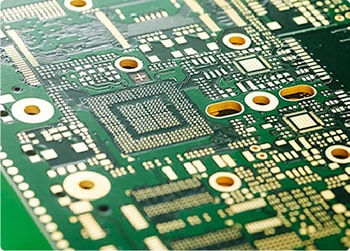
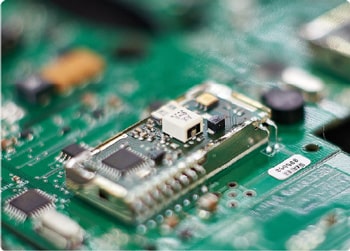










Modern wireless communication and microwave device design continuously demands circuit boards with steady high-frequency performance, good structural durability and affordable manufacturing costs. Traditional single-material PCBs can hardly meet the mixed requirements of RF signal transmission, digital circuit operation and mass production applicability. As a mature composite material solution, the RO4360G+IT180 hybrid multilayer PCB has been widely adopted in commercial RF hardware development. It effectively compromises high-frequency dielectric performance and standard PCB fabrication compatibility, making it a mainstream option for medium and high-frequency communication circuit design.
RF and mixed-signal PCB design often faces a common dilemma. High-frequency laminates deliver stable radio frequency performance but drive up project costs. Standard FR4 materials cut expenses effectively, yet they fail to meet strict low-loss and impedance stability requirements for microwave circuits. For most mid-to-high-end 5G communication, RF amplifier and radar sensor projects, the RO4360G+IT180 hybrid PCB stack-up has become a reliable, cost-effective solution favored by hardware engineers.
Rogers RO4360G serves as the core high-frequency dielectric layer of this hybrid circuit board. It is a ceramic-filled hydrocarbon thermoset substrate built specifically for microwave and millimeter-wave applications. The material maintains a consistent dielectric constant (Dk) of 6.15±0.15 at 10GHz, with an ultra-low dissipation factor (Df) of 0.0038. This stable low-loss property greatly reduces signal attenuation during high-frequency signal transmission, a key advantage for high-precision RF circuit design.
Thermal and mechanical performance further improves the board’s working reliability. RO4360G features a thermal conductivity of 0.75W/m-K. It dissipates heat generated by high-power RF traces much faster than ordinary RF substrates, avoiding performance drift caused by long-term high-temperature operation. Its low Z-axis CTE of 28ppm/°C effectively prevents PTH cracking and layer separation during multiple lead-free reflow cycles. This solves a common failure pain point for high-density multilayer RF PCBs.
IT180 high-Tg FR4 prepreg acts as the supporting structural and functional layer of the hybrid stack-up. Unlike ordinary low-Tg FR4, IT180 boasts a high glass transition temperature and excellent thermal stability. It withstands repeated high-temperature processing without board warpage, layer deformation or resin brittleness. Designers do not need to adopt expensive full Rogers stack-up. They can use IT180 for digital routing, power distribution layers and ground planes, while reserving RO4360G only for core RF signal layers.
This layered collocation brings obvious cost advantages without sacrificing circuit performance. It perfectly separates high-frequency RF signal areas and low-speed digital power areas on one single multilayer PCB. This makes the RO4360G+IT180 hybrid stack-up the optimal choice for compact mixed-signal communication modules. It balances high-frequency performance, structural stability and production cost perfectly for commercial RF hardware.
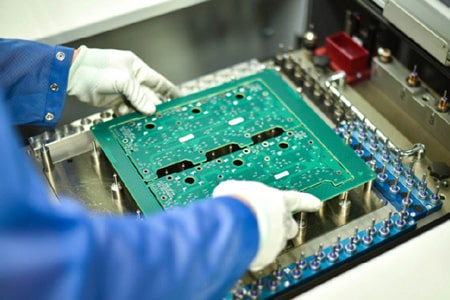
Fabrication process control determines the final yield of RO4360G IT180 hybrid PCB boards. RO4360G hydrocarbon materials and IT180 epoxy FR4 materials differ greatly in lamination characteristics. Manufacturers must adjust lamination pressure, temperature curves and resin flow parameters strictly according to material properties. Improper process settings will directly cause delamination, resin shortage and inconsistent impedance of RF traces, resulting in batch product defects.
Experienced PCB manufacturers always conduct stack-up coupon testing before mass production. They verify interlayer adhesion, dimensional stability and impedance consistency of the hybrid board to eliminate hidden quality risks. This rigorous process control ensures the reliability of impedance-controlled RO4360G IT180 hybrid PCBs in formal mass production.
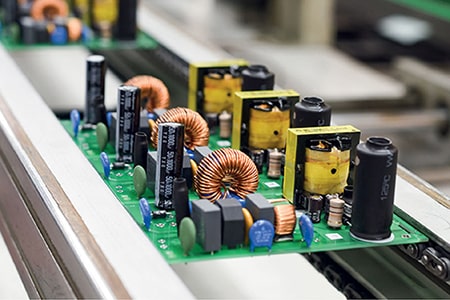
In practical engineering applications, this hybrid PCB structure covers a wide range of scenarios. It is widely used in 5G small cell transceiver PCBs, high-power RF amplifier multilayer circuits, miniature microwave filter boards and industrial radar sensor sub-boards. Its compact stacking structure supports miniaturized product design, while stable electrical performance guarantees long-term operational stability of communication and sensing equipment.
Designers need to grasp a few key design constraints during layout. Dielectric parameter differences exist at the bonding interface of RO4360G and IT180. Blindly copying simulation data of pure Rogers boards will lead to inaccurate impedance matching. Independent simulation and verification for hybrid stack-up structures are essential. Besides, minor thermal expansion mismatch between the two materials requires reasonable layout of large-area copper pouring near material boundaries to avoid post-assembly board warpage.
All in all, the RO4360G+IT180 hybrid PCB structure fills the gap between full high-frequency laminate boards and ordinary FR4 boards. It delivers low-loss high-frequency transmission performance, stable mechanical and thermal properties, and controllable production costs. For most commercial RF mixed-signal projects that pursue both performance and cost efficiency, this high-Dk low-loss hybrid PCB stack-up remains one of the most practical and mature solutions in the industry.